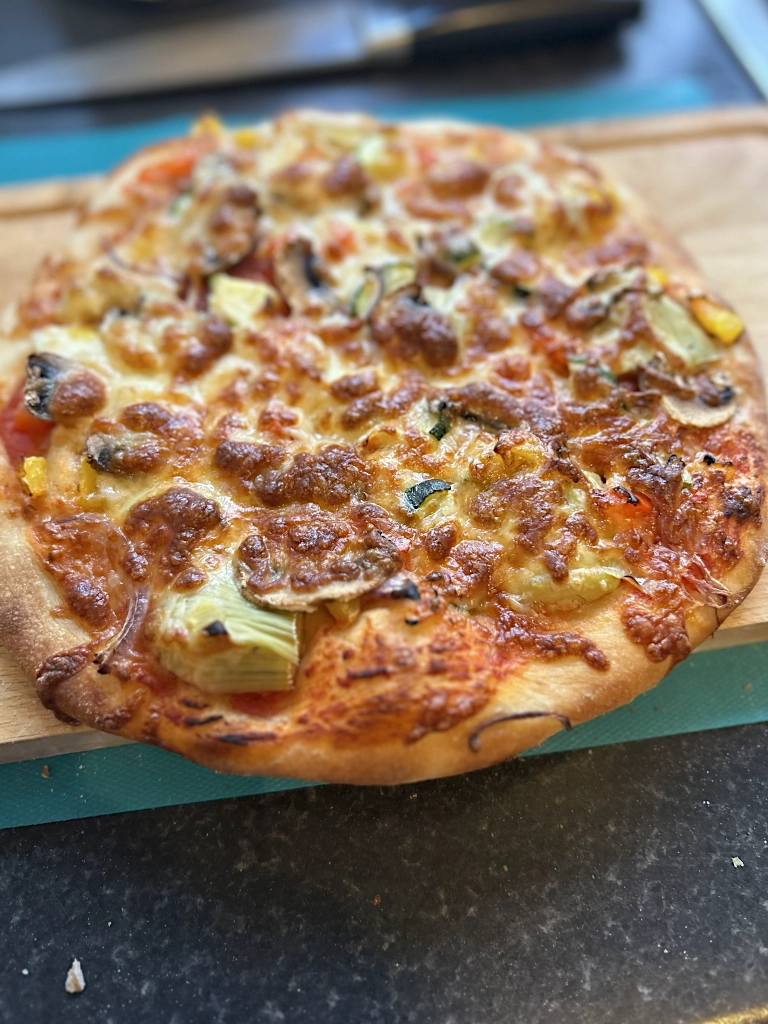
I’m a bit ‘on the fence’ when it comes to pizza dough. I quite like this dough, but I also like a higher hydration dough that gives a base with larger air holes. This one is easier to handle, though.
In fact, I really don’t know why I’m writing about making pizza dough; Paul is so much better at it than I am. Hopefully, he will post about some of his pizzas in due course.
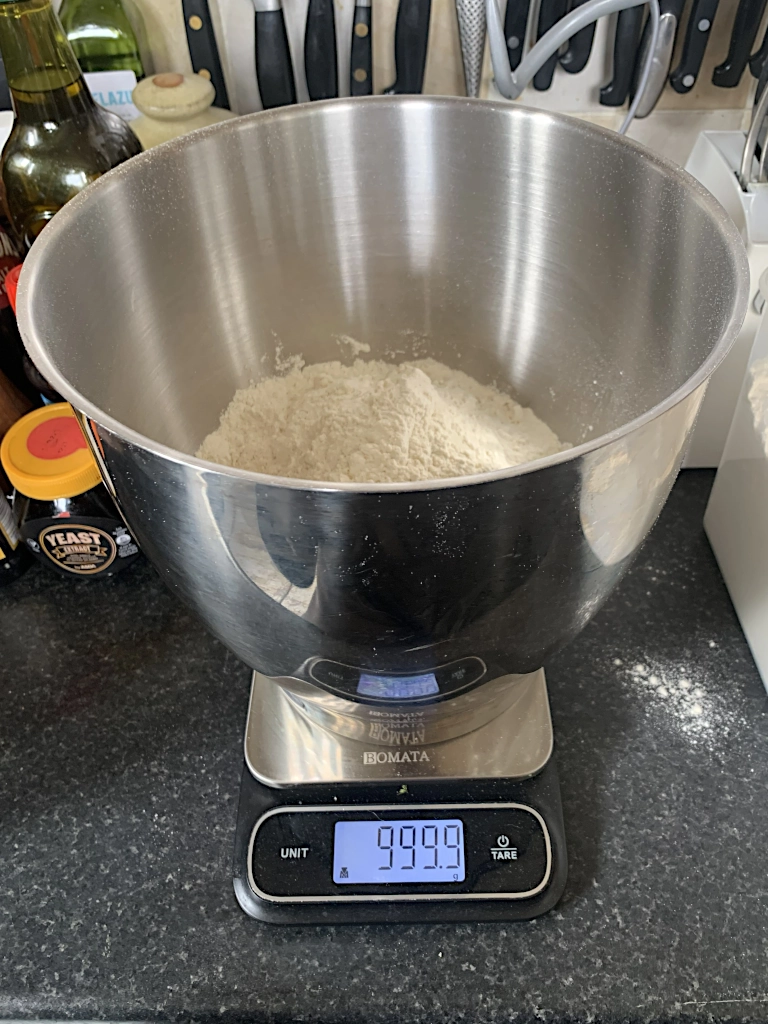
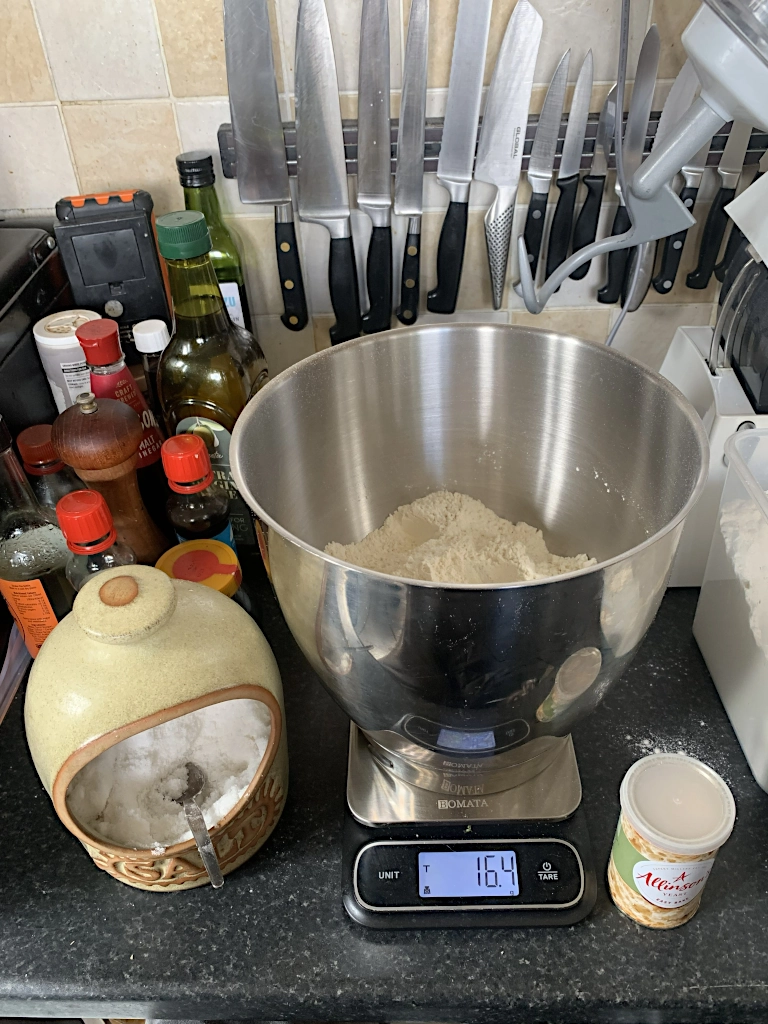

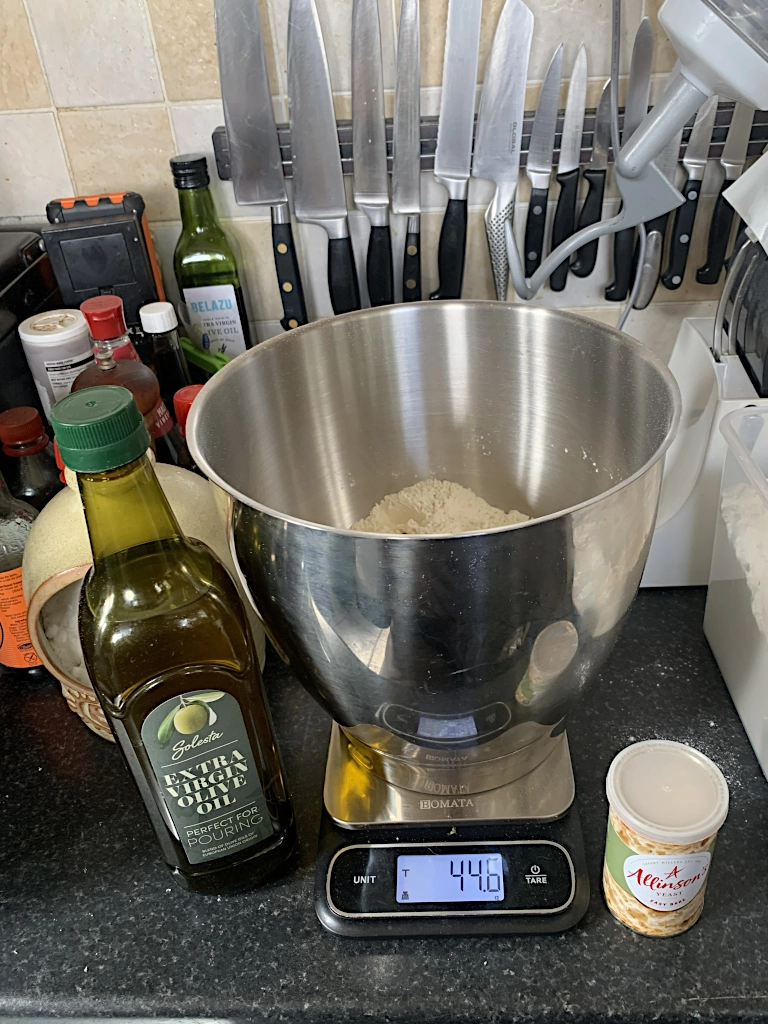
Ingredients:
1000gm Strong bread Flour (Preferably organic – see below)
10gm Instant yeast (1% of flour)
16gm Salt (1.6% of flour)
45gm Olive oil (4.5% of flour)
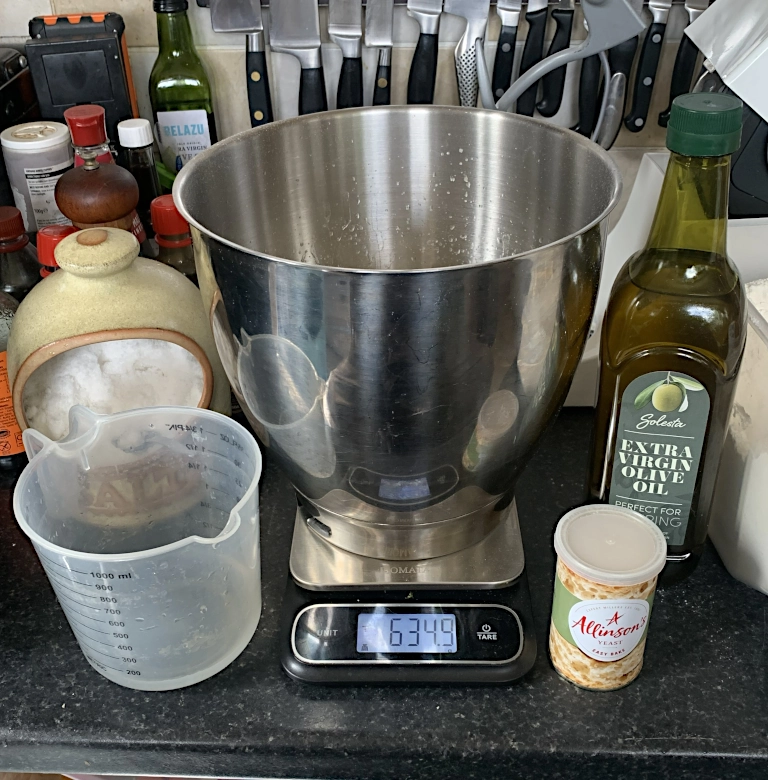
630gm Water (63% of flour)
Percentages
When making bread, the percentages are expressed as a percentage of the flour in the recipe, not the total weight of the dough.
These are known as bakers’ percentages.
As you can see from the photos, my weighing wasn’t exactly accurate!
Method:
I put the flour into the bowl first, then I add the yeast and mix it in. I add the salt and do likewise. I add the oil and water next, and mix the whole lot before putting it to knead on the mixer – this saves having to scrape down the mix in the bowl.
A better way to do this is: water, salt, flour, yeast – a case of do as I say, not do as I did, I’m afraid!

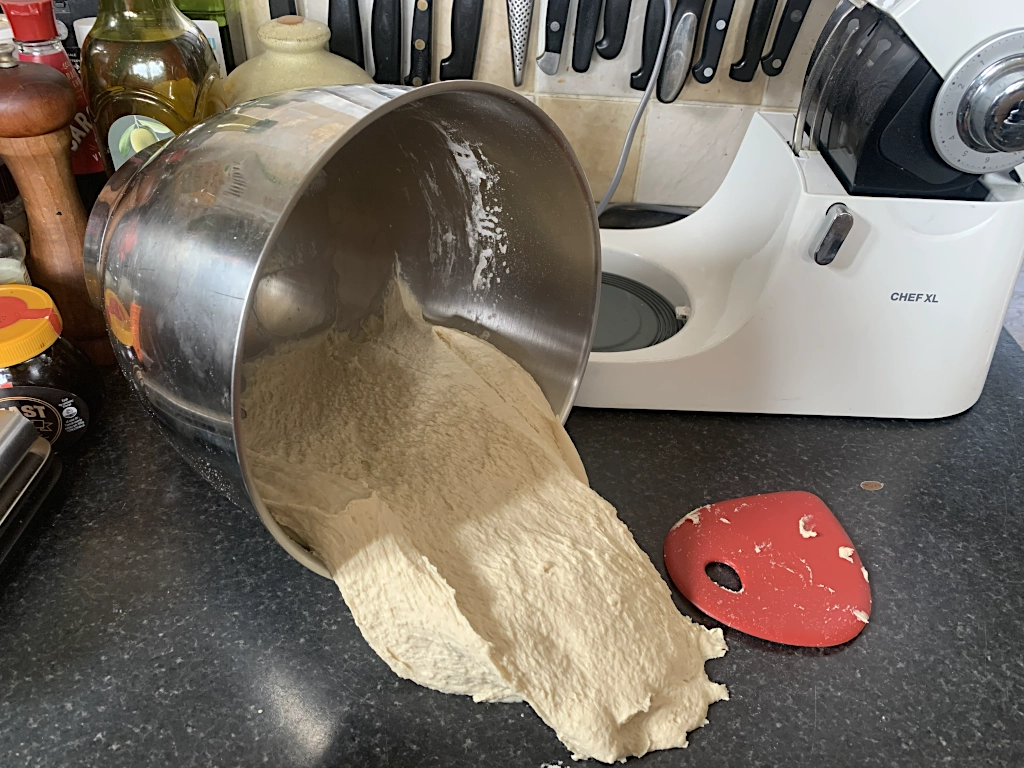

I mix it for 8 minutes and then scrape it onto the worktop, which I rub with a little bit of oil, only about ½ a teaspoon, to stop the dough from sticking – it’s less messy than flour in this circumstance.
I oil the empty bowl and place the dough, which I shape into a ball, back in. Then I cover the bowl with a damp muslin cloth; you could use cling film (plastic wrap), a plastic bag, or even a shower cap! I have muslin cloth for draining yoghurt and cheese, so I use that. I then leave the dough to rise for about an hour until it’s doubled in size.
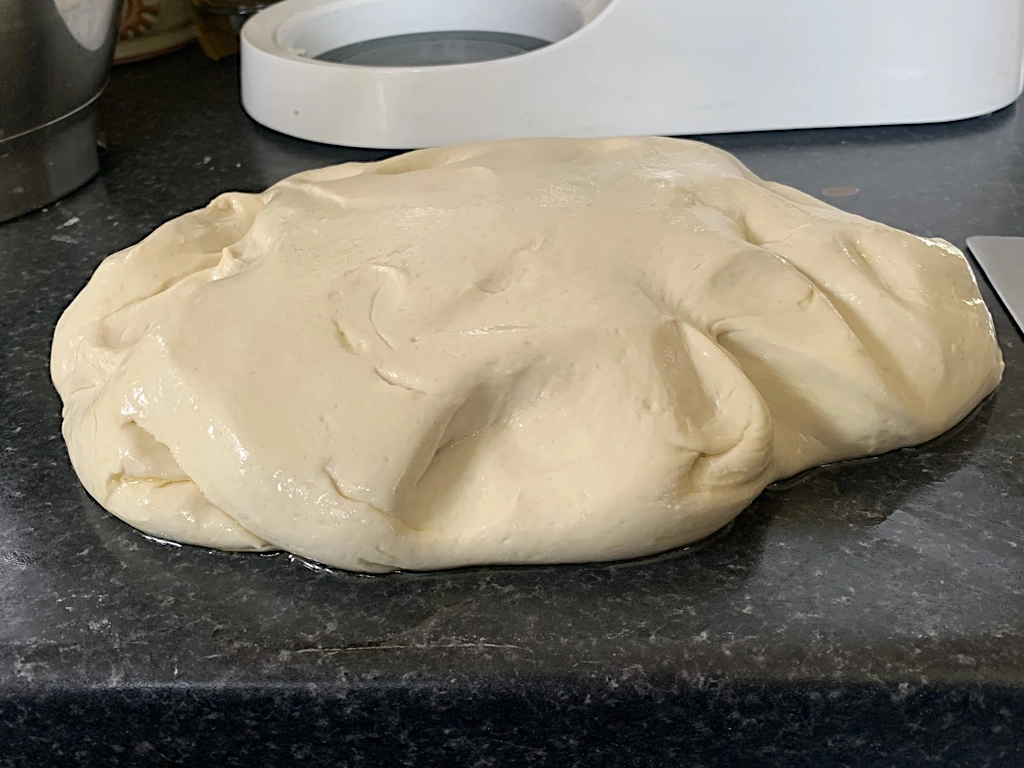
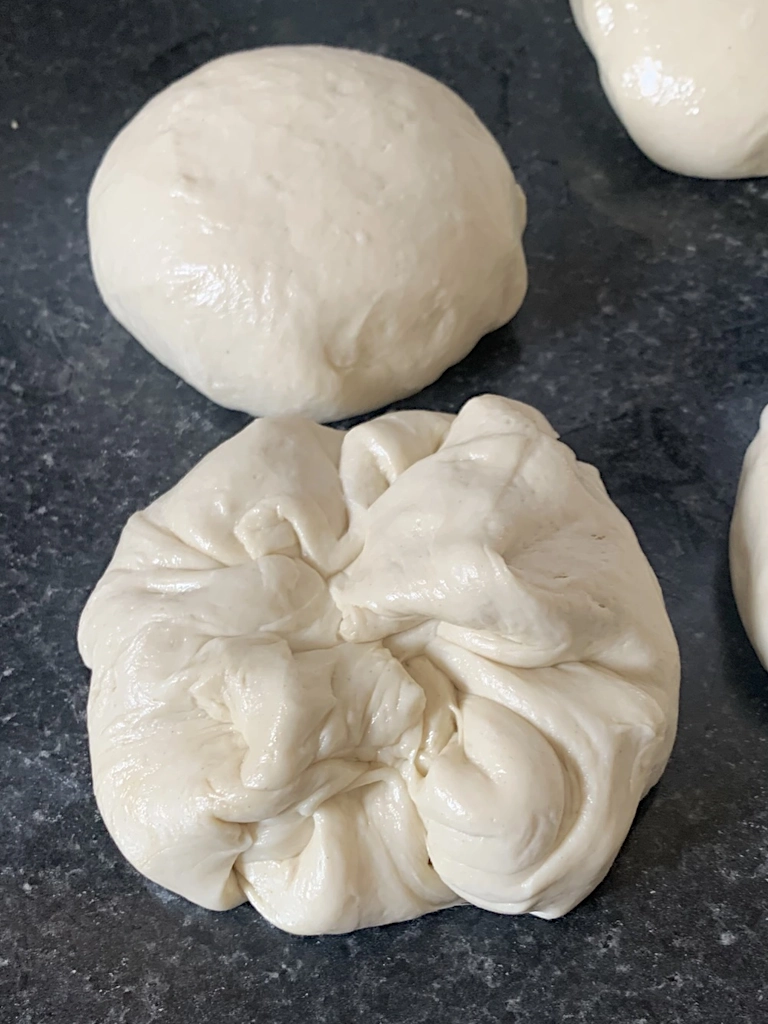
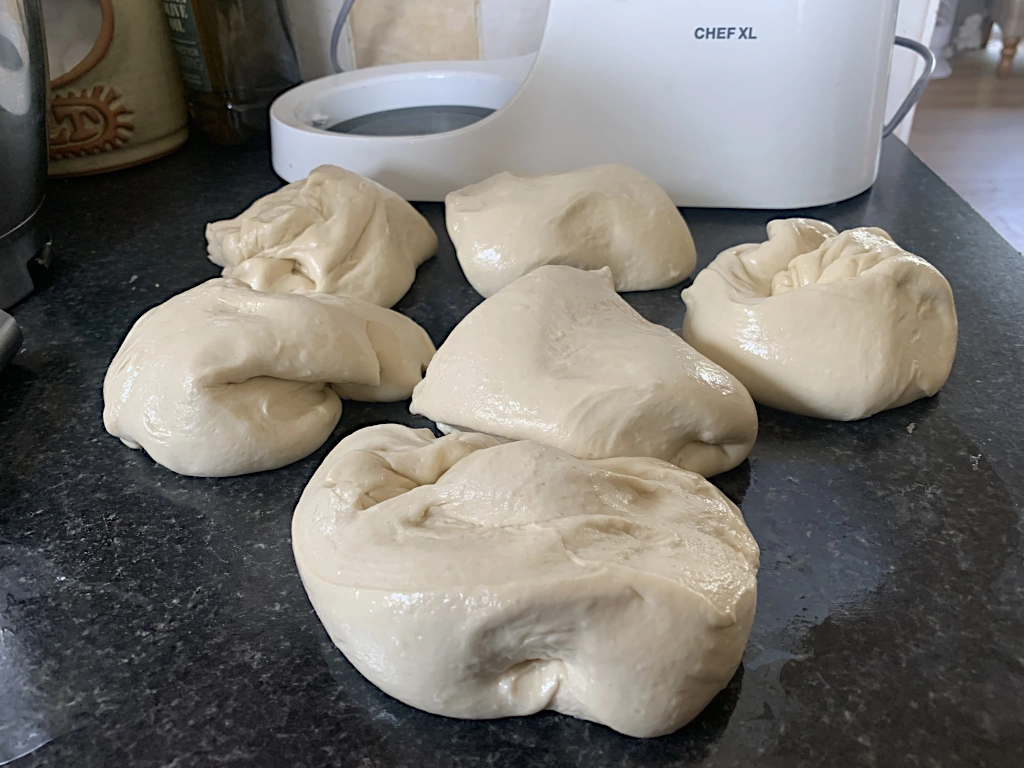
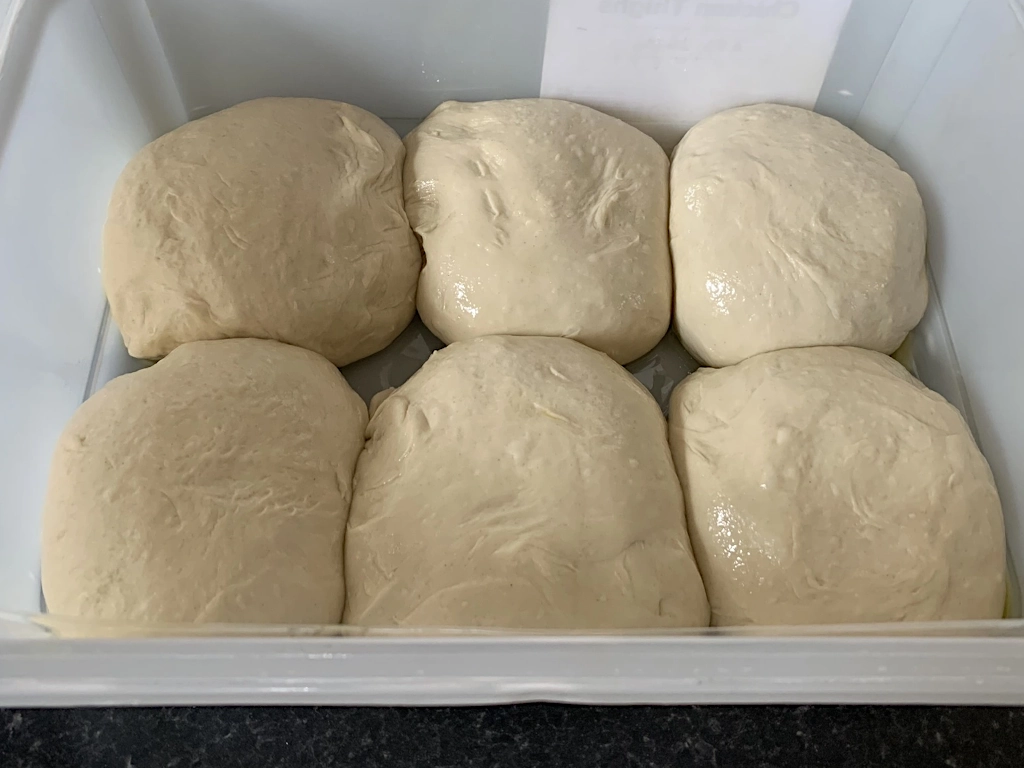
When it’s risen, I tip the dough out – there should be enough oil on it to stop it from sticking – if there isn’t, I use a little more. I cut it into 6 pieces for approx. 20-23cm, 8-9 inch pizzas. I fold the edges in from the sides to create a smooth bottom to the dough – then turn it over – I want smooth balls of dough that I put into an oiled container, cover and leave for a few hours.

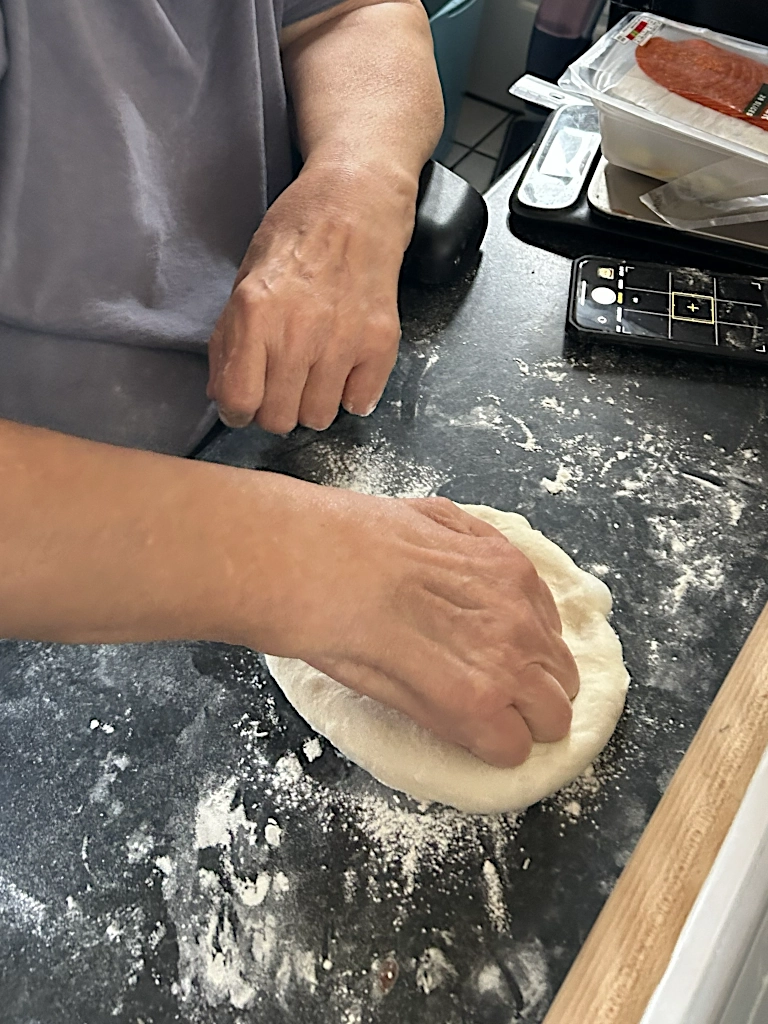
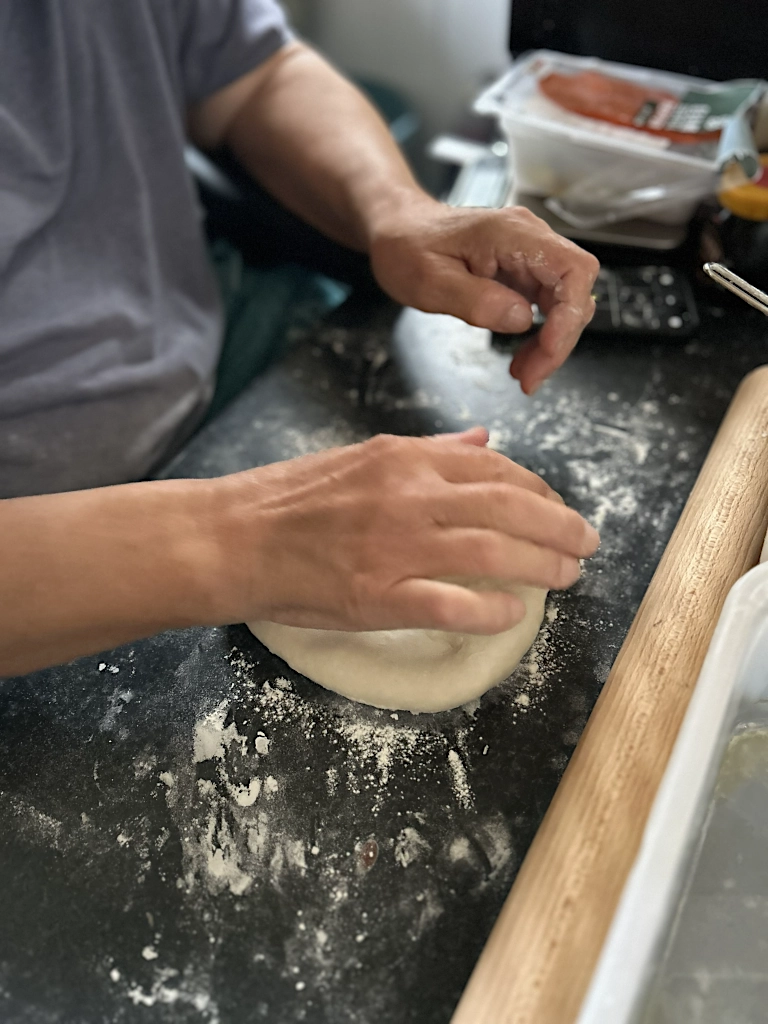
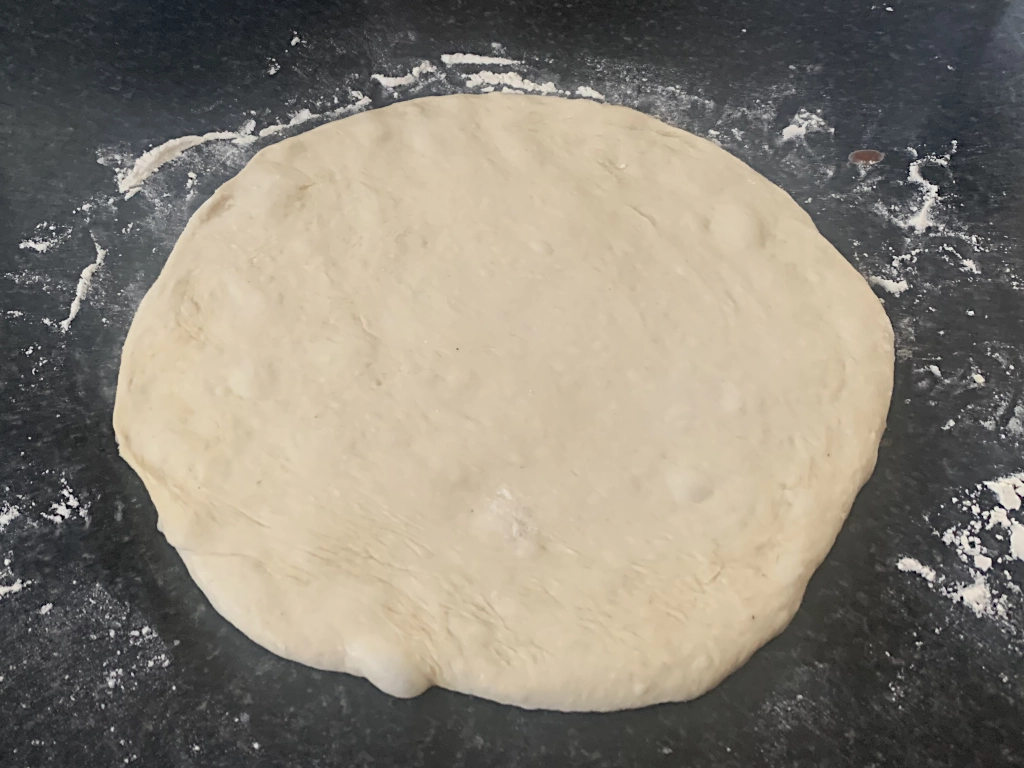
When you want to top andcook them, shape them on a floured surface. I find it easier to flatten and shape them using the palm of my hand and fingers than use a rolling-pin.


Tip:
Handling dough is much easier if you have a couple of different types of dough scrapers.



Why I use organic flour
Most non-organic flour is treated with glyphosphate (weedkiller) and chlormequat (plant growth regulator). The Agriculture and Horticulture Development Board (AHDB) monitor this and in tests 17 of 48 (35%) samples of wheat tested positive for glyphosphate and 44 of 48 (92%) were positive for chlormequat. Whilst these were at levels well below the MRL (Maximum residue limit), I don’t want any in the bread that I eat.
Other yeasted recipes that you may be interested in:

Index created by Visual Recipe Index